Search for
This Site
The Web

Get a free search
engine for your site


HOME

TIMELINE HOME PAGE

HISTORY OVERVIEW
1600-1874
1875-1899
1900-1909
1910-1919
1920-1929
1930-1939
1940-1949
1950-1959
1960-1969
1970-1979
1980-1989
1990-1999
2000-2005

HISTORY DETAILS
1600-1874
1875-1899
1900-1909
1910-1919
1920-1929
1930-1939
1940-1949
1950-1959
1960-1969
1970-1979
1980-1989
1990-1999
2000
2001
2002
2003
2004
2005

Click Here
to receive email
when this page changes
o Powered by NetMind o


ASIAN PACIFIC AMERICAN
HISTORICAL TIMELINE DETAILS (1600 to 1874)

Our victories, obstacles and leaders

Discover additional specific info on the many links (outlined in "red" or "blue") listed below


1400'S 
FIRST DISCOVERY OF NORTH AMERICA

Chinese explorers discovered America 72 years before Christopher Columbus landed in 1492. There are reports that Chinese explorers came in 499 A.D., is based upon a curious historical statement in the works of Ma Twan-lin, one of the most notable of Chinese historians. It is professedly an extract from the official records of China, embracing a
 
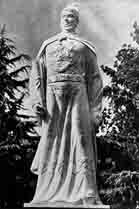
Zhang He
 
traveller's tale told in the year 499 A.D. by a Buddhist priest named Hwui Shin, on his return from a journey he had made to a country lying far to the east. This story seems to have been considered of sufficient importance to be recorded by the imperial historiographer, from whom Ma Twan-lin copied it. It describes the people and natural conditions of a country known as Fu-sang, and has given rise to considerable controversy, some writers asserting that Japan was the country visited, others claiming this honor for America. The literature of the subject is summed up in E. P. Vining's "An Inglorious Columbus," a recent work, in which the Chinese record is exhaustively reviewed, and the balance of proof shown to incline towards the American theory.

Gavin Menzies, British historian and map expert, made these findings to the prestigious Royal Geographical Society (RGS) in 2002. Mr Menzies said the Chinese discoveries were made by ships of the Emperor Zhui Di. The fleet, under the command of top Chinese admiral Zheng He, set sail in the early 1420s to bring back treasures from foreign lands. The ships were the best and the fleet the biggest in the world at the time.

  Zheng He was a eunuch for Emperor Yongli of the Ming Dynasty (1368-1644) before he was made an admiral. He was well-known at the time and his life was recorded in detail in the book "The History of Ming Dynasty." The evidence includes travel manuscripts, including maps, written in 1434 by Venetian merchant Nicolo da Conti, who was aboard one of the Chinese vessels. Other maps made by officers on the admiral's ships include those of America, the Cape of Good Hope and the Straits of Magellan, which links the Atlantic and Pacific oceans.

1565 to 1638 
HAWAIIAN SOCIETY IS FORMED

The transformation of ancient Hawaii from a loose collection of chiefdoms into the beginnings of a formal society may have happened in as little as 30 years, according to new evidence from 400-year-old temples.

Researchers employed an unusual technique to test the age of eight temples on the islands of Maui and Molokai and found that all were apparently built from about 1565 to 1638. Polynesians first came to Hawaii in double-hulled canoes from the Marquesas Islands around A.D. 700, or possibly earlier. Agricultural chiefdoms emerged as the population grew from a few hundred to approximately 400,000 by the time Captain Cook arrived at the end of the 18th century.

Temple construction on Maui was particularly rapid, occurring during a 30-year period beginning in the early 1600s, the researchers said. The time frame coincided with the rise of Chief Pi'ilani, who is credited with unifying two Maui chiefdoms into an enduring political, religious and economic system that went on to encompass nearby islands, according to oral histories taken in the 1800s. The fact that two chiefdoms merged around the time of the temple-building boom strengthens the idea that the temples do, in fact, provide physical evidence for important shifts in ancient Hawaiian society.

1587 
FILIPINO AMERICAN HISTORY STARTS

Filipino American history began on October 18, 1587. Filipinos were the first Asians to cross the Pacific Ocean as early as 1587, fifty years before the first English settlement of Jamestown was established.

From 1565 to 1815, during the Manila-Acapulco Galleon Trade, Filipinos were forced to work as sailors and navigators on board Spanish Galleons. They arrived in Morro Bay, California. A landing party consisting of Filipino seamen, namely Luzon Indios (Luzon Indians ), were sent to the California shore to claim the land for the Spanish king.

In 1763, Filipinos made their first permanent settlement in the bayous and marshes of Louisiana. As sailors and navigators on board Spanish galleons, Filipinos--also known as Manilamen or Spanish-speaking Filipinos--jumped ship to escape the brutality of their Spanishmasters. They built houses on stilts along the gulf ports of New Orleans and were the first in the United States to introduce the sun-drying process of shrimp.

In 1781, Antonio Miranda Rodriguez Poblador, a Filipino, along with 44 other individuals were sent by the Spanish government from Mexico to establish what is now known as the city of Los Angeles.

During the War of 1812, Filipinos from Manila Village (near New Orleans) were among the Batarians who fought against the British with Jean Lafitte in the Battle of New Orleans. This was just the beginning of the first wave of Filipino immigration into the United States.

The second wave began from 1906 to 1934 with a heavy concentration going into California and Hawaii. But between these waves of immigration, it is through the colonization of our native land , the Philippines, that brought us here.

For over 300 years, Spain had colonized the Philippines using Manila Bay as their great seaport, trading silver and rich spices with other countries surrounding Southeast Asia and the rest of the world. In exchange for gold, the Spaniards gave Filipinos Christianity. We were called Filipinos after King Philip II of Spain. This is why we have Spanish surnames like Bautista, Calderon, Marquez, and Santos.

1600'S 
FIRST ARRIVAL IN NORTH AMERICA

Chinese and
Filipinos reach Mexico on ships of the Manila galleon. The Chinese first contacted America in their Manila galleon trade. Chinese and Filipino sailors were employed to transport cargoes of Chinese luxury goods in the Manila galleons to Acapulco, Mexico, from 1565 to 1815. At that time, both Manila, Philippine and Acapulco were both Spanish colony.

By the 16th century, some Filipinos settled in Acapulco. In the 17th century, some Chinese became small store-owners in Mexico City. Some how, they migrated to New Orleans, and the Manilamen settled in the bayou of Louisiana's Barataria Bay, about thirty miles south of New Orleans around 1760. As a result, they were the descendants of the sailors of the Manila galleons. Additional Chinese workers (70) Chinese were recruited by Captain John Meares, Royal Navy, in his voyage in 1788-1789 for work in Nootka Sound - which is located on west coast of Vancouver Island, British Columbia.

1763 
FIRST ARRIVAL IN UNITED STATES

Filipino Americans were recorded to have settled in the US. The first recorded Asians in America arrived on ships that were part of the Manila Galleon trade, which was Spanish trade between Manila, Philippines and Acapulco, Mexico. During a stop-over on the Louisiana coast, some Filipino crew members jumped ship and ventured into the bayous. They escaped imprisonment aboard Spanish galleons by jumping ship in New Orleans and fleeing to the bayous. These "Manila Men" founded a village named Saint Malo that consisted of about a dozen small huts raised above the swamps. Eight generations later, some of their descendants can be found living in Louisiana today.

1781 
ANTONIO MIRANDA

One of the 46 founders of the present day Los Angeles was Antonio Miranda of the Philippines.

1781 
L.A.'S CHINATOWN IS FOUNDED

Los Angeles' Chinatown is founded. The heart of the first Chinatown developed in an area known as Sonoratown, where the notorious street Calle de los Negros was located; it had been named for the dark, illicit deeds done there and for the lowlifes who committed them. About 200 Chinese, along with gamblers and lawless, trigger-happy Yankee and Mexican drifters, inhabited the block-long alley near the plaza in El Pueblo.

1785 
1ST CHINESE MEN IN US

On August 9, 1785, the ship Pallas, skippered by John O'Donnell, arrived in Baltimore, Maryland. After unloading his cargo, O'Donnell set sail immediately, leaving stranded in the city a crew of thirty-two East Indian lascars (Asians) and three Chinese seamen named Ashing, Achun and Aceun. It was not known whether these unfortunates ever left these shores and returned to their ancestral land. This was the first recorded instance of Chinese in the East Coast in the United States. {Source: Thomas W. Chinn, Editor, A History of the Chinese in California, Chinese Historical Society of America, 1969.}

1788 
1ST CHINESE IN HAWAII & THEIR HISTORY

The history of the
Chinese in Hawai'i begins just 10 years after Captain James Cook's 1778 landing in the Hawaiian Islands. The Chinese arrived on board the British ship lphiginia under Captain John Meares. This ship was engaged in the lucrative fur trade between the northwest coast of America and China and wintered in Hawai`i until Spring 1789. In celebration of the 200th anniversary of this early encounter, 1989 was heralded as the Year of the Chinese.

The relationship between Hawai`i and China grew with passing years as sailing ships bearing furs to China stopped in Hawai`i for food, supplies, fresh water and repairs during the winter months. It was also a place for crew members, which included Chinese, to go ashore to relax. Tales of Hawai`i were told in China and after 1791 when the Chinese learned of sandalwood in Hawai`i the islands became known as Tan Heong Shan (Sandalwood Mountain), a name that remains in use even to this day. This wood was an important material for Chinese craftsmen and between 1810-1825, the height of its trade the monarchy derived a substantial income from sandalwood. The trees were harvested but not replanted, and after 1840 sandalwood was not exported.

Enterprising Chinese considered Hawai`i a land of opportunity in contrast to conditions in China in the early 19th century. In 1802 Wong Tze-Chun settled on Lana`i and grew sugar cane. With simple equipment he extracted juice and processed the sugar. He decided it wasn't feasible, so packed his equipment and returned to China. Other entrepreneurs came and established small sugar plantations on Hawai`i, Maui and Kaua`i in the 1820s and 1830s. They also setup other businesses and stores, and operated their own ships which brought workers from China. Many of the workers were employed in stores owned by relatives. Money earned was dispatched back to China to support other family members.

On Maui, the Chinese worked on plantations and built tunnels and irrigation systems in the West Maui Mountains. They founded the Wo Hing Society as a chapter of the Chee Kung Tong, a fraternal organization dating back to the seventeenth century.

The Wo Hing Temple, the fraternal hall of the local Wo Hing Society, which is a chapter of the centuries-old Chee Kung Tong, was originally built in 1912 and served a the social center for the Chinese who had migrated to work in the sugar cane fields.

The Wo Hing Museum, where documentation of their arrival is stored, was restored by the Lahaina Restoration Foundation. The Museum features an altar room, artifacts, antiques and a cookhouse. A Chinese Hawaiian history film and early Hawaiian Islands films, made in 1898 and 1906 by Thomas Edison, are shown in the former cookhouse.

In the 1840s, some of the sugar plantations were sold to western companies who used efficient steam engines. There was a great need for cheap labor, so the first load of Chinese laborers recruited in the Fukien and Canton ports, were brought on contract to Hawai`i in 1852. Life on the sugar plantations was difficult, so at the end of their contract many workers returned to China or went into Hawai`i's urban areas to do other jobs.

Rice cultivation was easier and many found employment on rice plantations owned by fellow Chinese. Often these rice plantations were established on former taro lands. Rice grew well in the islands, and much was exported to California and even to China. The industry continued into the twentieth century and brought an excellent income to owners. Chinese were also active in the poi industry, frequently growing the taro for their poi factories.

With the increased demand for sugar and rice plantation laborers, the Chinese population greatly expanded in Hawai`i during the late 1870s and 1880s, with over 1,000 people a year arriving during this period. After Hawai`i's annexation in 1898 by the United States, that nation's labor exclusion law affected the number of laborers brought to Hawai`i, but many Chinese continued to come independently as teachers, craftsmen, doctors and business people as well as wives and children of those already in Hawai`i. They became settlers and their children received good educations and helped Hawai`i to become what it is today. Their impact economically, socially and politically was outstanding and well known.

1790 
NATURALIZATION ACT

This law stated that only "free white persons" can become US citizens.

1800'S 
IMMIGRATION POLICY: PHYSICAL EXAMINATION

During the 1800s, all persons entering the United States had to have their papers checked. They also needed to be examined by doctors to make sure that they were not ill nor coming with any diseases. The processing for the Chinese began with physical examination. Chinese were forced to go through tests for hookworm and liver flukes.

1800 - 1825 
FOREIGN MISSION SCHOOL

From 1818 to 1825, the first group of students, native of the Canton Province attended the Foreign Mission School in Cornwall, Connecticut. In 1847, three Chinese students from the same province attended the Monson Academy in Massachusetts, including Yung Wing, who later became the first Chinese student to receive an American college degree.

1829 
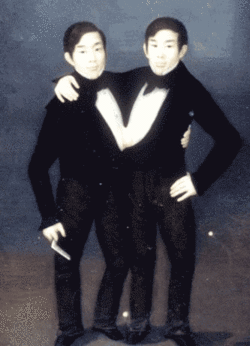
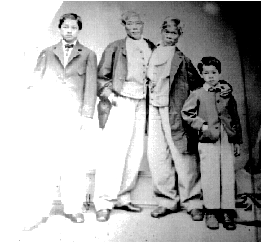
SIAMESE TWINS - CHANG & ENG BUNKERS

In 1829,
Chang and Eng Bunkers left their country for America to settle in a small town in North Carolina name Wilkesboro to find peacefulness and a new home.

Chang and Eng Bunker were born in Siam — modern day Thailand — in 1811. Connected by a thin band of flesh at their chest, they were the original "Siamese Twins," a term now used to describe any two human beings joined at birth by living tissue.

When the twins were teenagers, they began traveling with two agents, Robert Hunter and Abel Coffin. With their savings of $10,000, Chang and Eng purchased a retail store and sold everything from linens to chewing tobacco. Unfortunately times were hard and the twins soon gave up their store and decided to take up farming, building a house in nearby Traphill. In 1839, Chang and Eng became American citizens and acquired their new last name, Bunker.

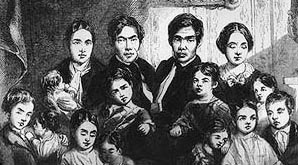
They each married one of the Yates sisters, Sallie and Adelaide.

After several years the foursome were married at the Yates house. Eng and Sallie welcomed their firstborn daughter. Six days later, Chang and Adelaide welcomed their first daughter. This continued until Eng and Sallie had produced 11 children. Chang and Adelaide were almost as productive, with 10 children.

Family and financial troubles eventually forced them to realize that two houses were needed. These houses were built in Surry County and less than one mile separated them. The wives and children lived apart. Eng and Chang shared three days with Sallie and her children and then three days with Adelaide and her children.

After many childhood and adult illness, including a stroke suffered by Chang, Eng woke one cold January morning in 1874 to find his brother cold. When he realized Chang was dead, Eng began to sweat and feel faint. He died a short time later: doctors attribute his death to shock.

1830'S 
CHINESE ARRIVES IN HAWAII AND NEW YORK

Chinese "sugar masters" working in Hawaii. Chinese sailors and peddlers in New York.

1840 - 1870 
ARRIVAL OF THE CHINESE LABORERS / "SIX COMPANIES" FORMED

It is estimated that
one million Cantonese left the two provinces of South China between 1840 and 1875, the majority coming from Kwantung . . . The majority departed as free workers for the mines of California, Canada, or Australian Queensland, and for the French, Dutch, and English plantations of Southeast Asia. Some Cantonese were recruited by Surinam and other Dutch possessions, and the English and French islands such as Mauritius and R‚union. Of the total number of emigrants, roughly 100,000 persons signed contracts to work in Peru, and 142,000 went to Cuba.

Indeed, subsequent renewals of the act enlarged the meaning of the term "laborer" to include salesmen, clerks, buyers, bookkeepers, accountants, managers, storekeepers, apprentices, agents, cashiers, physicians, restauranteurs, and laundry operators, hardly "coolies" by any stretch of the verbal imagination, no matter how it might be attached to this kind of rhetorical imagery.

Moreover, the original act and subsequent as well as earlier judicial rulings, put two additional burdens on Chinese who wished to emigrate. The first was denial of citizenship: Section 14 of the Act provided "That hereafter no State court or court of the United States shall admit Chinese to citizenship; and all laws in conflict with this act are hereby repealed."

Organized labor from either the East or West Coasts did nothing to aid in the repeal of this law, and in fact did much to encourage its continuance. To give but one telling example: In 1924, Hugh Frayne, a New York representative of the A.F.L., told the Congressional committee holding hearings on immigration restriction, "Labor is for the entrance of suitable immigrants from all nations except the Asiatic ones."

To be sure, from time to time, the importation of Chinese under fixed contracts was proposed in order to supply certain regions with low paid agricultural workers the three outstanding instances being the abortive "Coolie Bill" proposed in California in 1862.

However, much like the Chinese indentured in the Caribbean in the same era, the few Chinese who were brought to the South in the post-Civil War era resisted confinement to their proposed serfdom on plantations, settled as shopkeepers in small Southern towns such as Greenville, Mississippi, and served for decades as middlemen proprietors selling goods to blacks, brokering commercial and occasionally local political relations between blacks and whites and, in the Delta region, inter-marrying with African American women and parenting what would become bi-racial families.

The Chinese coolie, as envisioned in the paranoia of the Sinophobes, and in the portrait of him provided by Gyory, was for the most part, a figment of the white racist's fertile and fetid imagination, an element in the propaganda taken up not only by politicians as Gyory would have us believe but also by organized and organizing labor's leaders regardless of party affiliation as a reading of the Proceedings of the Asiatic Exclusion League would reveal.

In one, the "credit-ticket" system, "passage money was advanced to the emigrant who then repaid his debt after arrival in the new land"; the other the coolie system proper, it might be called "involved emigrants signing term contracts of service in foreign lands in return for their passage." The distinction in practice was familiar to the peoples of Southeastern China, whose husbands and sons made up the bulk of Chinese going overseas.

In the latter system, "Chinese were frequently tricked or coerced into going abroad. Cantonese called these dealings maaijeutzai, meaning "selling pigs."

In fact, before the 1870s Chinese shoemakers had formed their own labor guild, the Li-Sheng Tang. In 1876 Chinese shoemakers engaged in a violent job action, demanding, among other things, a return of the money given to a contractor who had placed 750 of their fellow workers with two Euroamerican firms. In this action the Chinese strikers not only went out in open defiance of Yee Chung and Co., the contractors, but also directly opposed the actions taken by the "Chinese Six Companies," i.e., the community-wide confederation of traditional associations that held sway over Chinatown's denizens for decades and that supposedly kept all Chinese in supine thralldom. The Six Chinese Companies called Tongs formed to represent and organize Chinese interests in San Francisco and California were formed during the 1860s.

1840'S 
HISTORY OVERVIEW OF THE CHINESE COMMUNITIES

1840-60 / 1846: First American flag in California is raised in Portsmouth Square. It eventually becomes the city's canter for the next several decades. As a result, large numbers of Chinese Americans open up businesses nearby Portsmouth Square, laying down the foundations for the eventual formation of Chinatown.

1848: The Gold Rush of 1849. When gold is discovered at Sutter's Mill in 1848, the lure of economic prosperity aboard encourages tens of thousands of Chinese to emigrate to the U.S., most of them coming through San Francisco, but also settling in Sacramento and Marysville.

1849-54: Chinatown Benevolent Associations (Six Companies) are established in Chinatown. These family and district associations are founded to faciliate organization within the local communities. In 1901, Benevolent Association.

1850-1864: Taiping Rebellion leaves 20,000,000 Chinese dead and spurs mass immigration out of China.

1852: Foreign Miner's Tax levied against Chinese and Mexican miners to protect white miners' interests. Chinese masons hold first labor strike in San Francisco history. Hong Fook Tong theater company of China ships over and build a theatre for Chinatown, reflecting that a permanent community is developing in the nascent neighborhood.

1857: Kong Chow Temple becomes the first Buddhist temple in S.F.

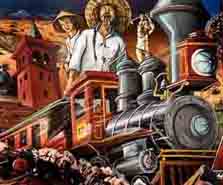
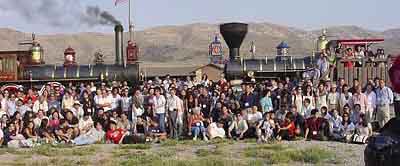
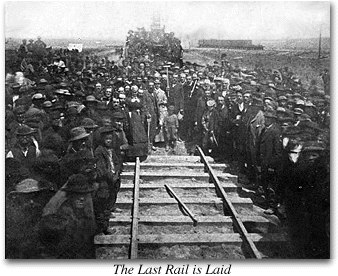
1864-1869: Central Pacific Railroad Company, which is 90% Chinese laborers, helps build and complete the Transcontinental Railway. Thousands of Chinese lives are lost in the dangerous working conditions. In 1867, Chinese railway laborers stage an unsuccessful, but massive two-week strike.

1870: Anti-Chinese ordinances are passed in S.F. to curtail their housing and employment options. Queues are banned.

1877: Angry white workers riot in Chinatown in protest of a perceived labor threat by Chinese workers. This is only one among many cases of anti-Chinese violence around the West. Cases like this further forced Chinese Americans into ethnic enclaves like Chinatown for their protection.

1906: The Great Earthquakes of 1906 is a watershed event for Chinatown. Meanwhile, the destruction of municipal records allows for the forging of birth certificates that promptly the influx of thousands of more Chinese, who became known as paper sons.

1907: First Canton Bank opens.

1908: Chinese Chamber of Commerce formed.

1910-11: Chinese revolutionary leader Sun Yat Sen comes and lives in Chinatown.

1910-1940: Angel Island, in SF Bay, operates as a detention and processing center for Chinese immigration. Thousands of Chinese immigrants spend weeks and months detained, undergoing rigorous interrogations by U.S. immigration officials.

1911: Chinatown YMCA founded its headquarters, on Sacramento St., is completed in 1926.

1915: The segregated Oriental School is opened in Chinatown. This is SF's attempt to provide for the educational needs of Chinatown youth, but though a segregated system in order to prevent them from accessing white schools.

1916: Chinatown YMCA founded.

1921: Chinatown Public Library opens.

1927: The Chinese Playground, on Sacramento St., is built.

1950s: The prosperous economy of the 1950s allows all an emerging middle-class Chinese Americans to leave Chinatown in large numbers for suburban neighborhoods. In S.F., the Sunset and Richmond districts are the neighborhoods of choice. Chinatown remained as low- income neighborhoods, often for newly arrived immigrants.

1965-present: Congress passes the Immigration Act of 1965, heralding a new era in Asian immigration. Among its significant changes, the Act dramatically increase the quota set for Asian immigration, but it also favors middle class immigrants, thus influenced the changing demographics of Chinese Americans over the next 30 years. The new influx of low-skilled Chinese immigrants repopulates Chinatown with a new generation of Chinese Americans.

1847 
ARRIVAL OF FIRST CHINESE STUDENTS & GRADUATES

April 12, 1847: First Asians arrive in the United States A group of three Chinese students arrived in New York City, becoming the first Asians officially entering the United States. However, Chinese records show that Chinese Buddhist priests traveled along the West Coast from present-day Brtish Columbia down to Baja California in 450 A.D. Spanish records show the existence of Chinese shipbuilders in present-day southern California between 1541 and 1746. Chinese shopkeepers were already in Los Angeles when the first Anglo Americans arrived.

The discovery of gold at Sutter's Creek, California on January 24, 1848 would bring the first significant influx of Chinese to the United States. That wave was led by two men and a woman arriving in San Francisco on February 2, 1948 on the brig Eagle. The next significant wave of Chinese immigrants were laborers recruited from Amoy by 94 Hawaiian sugar companies in January of 1852.

Yung Wing was one of three Chinese students that arrive in New York for school. In 1854, his graduation from Yale marked the first such event for Chinese Americans

1847 
CHINATOWN IN CUBA

Although Chinese may have arrived in Cuba earlier, the first large group of Chinese arrived on the Spanish frigate Oquendo in 1847 to work on sugar plantations. When the ship dropped anchor in Havana harbor, only 206 of the original 300 contract laborers from Guangdong province had survived to work the sugar fields. These indentured workers and those who followed were recruited to fill the gap created by the termination of African slave trade. Estimates of this immigration over the next quarter century range from 50,000 to 130,000. About 13 percent died during the voyage or shortly after arrival. Between 1860 and 1875, a second wave of Chinese immigrants arrived: about 5,000 who fled anti-Chinese sentiment and legislation in California. “The Californians,” as these relatively wealthy newcomers came to be called, laid the economic foundation of Havana’s Chinatown. Havana’s Chinatown became the largest Chinese enclave in Latin America. A third wave of Chinese immigrants to Cuba resulted from the political and economic upheavals between the establishment of Sun Yat Sen’s republic in 1912 through the early years of the Chinese revolution. At its height, the ethnic Chinese population in Cuba was about 40,000.

1848 
CHINESE IN CALIFORNIA

Gold discovered in California and the
Chinese begin to arrive. Gold is discovered at Sutter's Mill, California. Chinese in the Canton area were lured by pamphlets distributed by opportunistic ship owners who hoped to fill their passenger vessels. Chinese eager to escape overpopulation, famine, and poverty that resulted from the Taiping rebellion came to California to make their fortunes in California's "Gam Saan" - Gold Mountain.

1848 
FIRST CHINESE SERVANTS IN THE UNITED STATES

Charles Gillespie's female Chinese servant stepped off the brig Eagle from Hong Kong at the San Francisco wharf and became the first Chinese servant on the West Coast of North America. Many of the Chinese servants who followed her on the West Coastwere almost entirely men, unlike the case on the East Coast where most servants were women. Domestic service involved cooking, cleaning, waiting table, laundry, child care, and the hundreds of other asks that the primary caregiver in each home provided.

(In an 1868 statistical report approximately 7 per cent of the Chinese immigrants in California were domestic servants; cited in Tsai, Shih-shan. China and the Overseas Chinese in the United States, 1868-1911. Fayetteville, University of Arkansas Press, 1983. 21.)

They acquired a good reputation of providing good service as seen in the following comments - "The Chinese barbarians have captured Boise and will soon rule the whites. I would like to know if this is a free and independent country? If so, why should the Chinamen carry on their bull-dosing [sic] operations? I went to Boise city to try and get employment but the answer at each house was, "We've got a Chinaman." I inquired the amount of wages paid. The answer usually was $8 a week. I asked several of them what they would give a good cook and house keeper if they could get a white woman. The reply was about $4 a week. I left them disgusted. . "

Many cities had employment agencies, often run by entrepreneurial Chinese, that brokered opportunities and vacancies.("Idaho Recorder on April 18 of 1894, further noted that a Chinese company called Fong Kee & Co. had opened an employment agency for Chinese cooks and laborers. [p.2,c.3],"

As James Robinson Jewell noted, "The resentment demonstrated against the Chinese domestics was in part a bitterness towards the lifestyle it took to employ them."

Anti-Chinese agitation, common throughout the West, made a complicated mistress-servant relationship even more difficult. As a result, the language used to refer to the Chinese servants in contemporary newspaper accounts, magazines, books, even private letters, was, as was common at the time, emotionally charged and negative in tone. Frequent terms were "Chinaboy," "John," "Chinaman," "Celestials." While these terms are rightly avoided today, because of the connotations which have accreted to them over the years, they do not necessarily reflect the whole of the relationship. Some, in spite of using the same racist terminology at times, defended them from such stereotyping. Ironically, even one writer, who widely and commonly used such terms in a single article about Chinese servants, could conclude "yet, as has so often been said, in many respects they are the best servants that we ever have had."

Employer suspicion and employee theft were translated into a racial characteristic: all Chinese or blacks or Irish were thieves. Unlike other immigrant groups, Chinese laborers, by law and custom, generally could not bring wives here to establish families. Thus, they were unable to participate in what has been called one of the great "defining themes" of western history, that of "underclass exploitation followed by accommodation and finally assimilation."

Entrepreneurship is the ability to see value where others do not. It is also the ability to "make lemonade when life hands you lemons." Living on the margins of the culture attunes one to the imbalance of goods and services. Domestic service provided the Chinese with an experience at the heart of the culture, within the Caucasian home, in the bosom of the family; an experience that offered glimpses of needs that could be fulfilled from the margin. Many seized the entrepreneurial moment and made a successful life for themselves in a strange land among a strange people.

1848 
1ST ASIAN WOMEN IN US
The American ship Eagle arrived at San Francisco on April 1, 1848. Among the passengers were 3 Chinese, two men and one woman. When the news of the discovery of gold came, the men left for the hill. A passenger of Eagle, named Charles V. Gillespie hired the Chinese woman as a servant of his household. It is believed that she was the first known Asian woman arrived in the San Francisco.

The first recorded of these women, Marie Seise, stepped off a ship named The Eagle in San Francisco in 1848 as the servant of a family of traders, the Gillespies of New York. Before she worked with the Gillespies, she ran away from her parents in China to avoid being sold, worked as a servant in Macao, married a Portuguese sailor, and moved as a servant with another family to the Sandwich Islands after the sailor deserted her. Marie Seise was obviously determined, at whatever expense, to chart her own course.

Nor was Seise alone. Another "China Mary" - a generic name ascribed to many Chinese immigrant women by their new frontier neighbors-ran away from her home in China when she was nine, had made her way to Canada at age 13, outlived two husbands and moved to Sitka, Alaska - where she survived as a fisherwoman, hunter and prospector, restaurant keeper, nurse, laundress, and official matron of the Sitka jail.

Yet another, Yuen, similarly outlived three husbands and was said to have been "the toast of her countrymen" in the Wyoming mining and railroad camps where she cooked during Pony Express days. Another notable woman was Mary Tape, who sailed from Shanghai with missionaries at age 11, then married and lived in California. Mary Tape worked as an interpreter and contractor of labor, taught herself photography and telegraphy. When they tried to bar her daughter from public schools, she won a case against the San Francisco Board of Education in court.

During this time there was a brief period of free competition where Chinese women had the opportunity to be a free agent and entrepeneurs (as oppose to prostitutes/sexual slaves) before the (sex) trade became totally controlled by males. This is seen in books/articles describing the life story of the heroine (Ah Toy) in this initial brief period depicted as a twenty-year-old prostitute from Hong Kong who landed in San Francisco late in 1848. A free agent serving a predominantly non-Chinese clientele during a period of affluence, she accumulated enough money to buy a brothel within two years and retired the widow of a wealthy Chinese man.
For additional information, click HERE

1848 
AH TOY - INDEPENDENT CHINESE MADAM

Just like other noteworthy prostitutes of the West such as Sarah Bowman or Dona "La Tules" Gertrudis Barcelo, Ah Toy succeeded by adapting to the changing conditions of her environment. Many historians hypothesize that she was the first Chinese prostitute in America. She arrived in San Francisco in late 1848. Ah Toy maintained her independence and freedom from perils of most Chinese prostitutes brought to the US. She became the most popular and successful courtesan in San Francisco who set up her own brothel of Chinese women.

AH TOY'S BEAUTY AND BUSINESS
She gave no favors to anyone but charged an ounce of gold dust (at $18 an ounce) just for the privilege of looking at her face. Men lined up in an queue that stretched for a block or more. At the height of her fame in the early 1850s, when the boat from Sacramento touched shore men would leap from their ships/boats and race to her courtyard in hopes of catching a glimpse of her. She was as famous in her day as Lola Montez the dancer was in hers.
Tall and with an ivory complexion, Ah Toy in her youth was so beautiful that when news of her arrival reached the goldfields in that land bereft of women, miners put away their picks and shovels and traveled a hundred miles to San Francisco just to look at her. Her English language skills and her understanding and employment of the American judicial system set her apart as a most unusual Chinese woman. Ah Toy used the court system to win legal battles and defend herself and her flourishing practice. This very public and smart person was capable of manipulating the very system which made her a victim, just like the many other Chinese immigrant women!

Ah Toy was a successful entrepreneur. Unlike most Chinese prostitutes, she independently operated establishments of "commercial vice" and resisted attempts by the male-dominated society (i.e. tongs) to control her business or extort "protection money from her." Ah Toy began her business from a humble residence in a small shanty on an alley off Clay Street (near Kearny). As her business grew she was increasingly sensationalized in newspapers and was described as "strangely alluring" by foreign visitors to San Francisco.

In 1850 - Ah Toy expanded her business employing two recently arrived prostitutes. Within two or three years, she was doing sufficiently well to move into bigger quarters. In 1852, she was listed as being the proprietor of two "boardinghouses." That year, she was also blamed for the immigration of several hundred Chinese prostitutes. Despite the increasing involvement of Tongs in the industry, Ah Toy maintained control of her business operations for at least two more years. Benson Tong notes that she even "procured prostitutes for other Chinese brothels."

Ah Toy, the second Chinese woman in San Francisco, joined the ranks of prosperous immigrant prostitutes who had such professional names as Bowlegged Mary and Squirrel Tooth Alice (who got her moniker posing for photographs with her pet squirrel) - along with the other "Madams" listed above.

 
Click HERE to Purchase
 
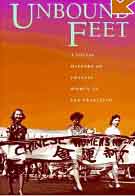
One of the greatest achievements of Yung's Unbound Feet is the more complete life story of Ah Toy through oral interviews of witnesses and careful search of local newspapers. She was the second Chinese woman to arrive in the United States in 1855. Speaking English and having bound feet, she came to the United States from Hong Kong to "better her condition", and had a rather long career from 1848 to the 1860s. She was last seen selling clams on a beach in Santa Clara before she died. Yung also recovers Ah Toy's obituary in a local newspaper in 1928 that shows Ah Toy lived a long life (almost one hundred years old when she died). Judy Yung also identifies her picture in one of Genthe's photographs taken in San Francisco's old Chinatown.
Around 1854, Tongs began importing women for prostitution, marking the beginning of the end of the period of "laissez-faire" practices, and the increasing rarity of prostitutes operating as autonomous entrepreneurs. While competition and tong control eventually brought about Ah Toy's downfall and removal from the spotlight in San Francisco prostitution, her story indicates that the dynamics and foundations of the industry are much more complicated than is commonly assumed. After a few years in the Bay Area, Toy departed San Francisco in 1854, leaving litigation in her wake. In one suit, she accused a client of trying to pay her with brass filings instead of gold dust. She left before it came to trial.

Madam Ah Toy, several times married, lived to a venerable age. Unlike tens of thousands [of women] in her line of work, she is now enshrined in the hall of famous memories of this remarkable city, which admires enterprise, courage, and the sort of character that could cope with the hazards of survival in the Wild West. It is a commentary on the times that the business she engaged in was one of the very few that in those days could give her an independent living.

1849 
HAWAII'S MERCHANT PRINCE: CHUN AFONG (1825 - 1906)

Chun Afong, the first Chinese millionaire in Hawai'i, came to Honolulu from the Pearl River Delta region in China in 1849 and within six years he became well known because he made a fortune in retailing, real estate, sugar, rice and opium. He was a member of King Kalakaua's privy council, married Julia Fayerweather, of royal Hawaiian blood and became one of the richest and most prominent members of Hawaii's Chinese community. Together they had thirteen daughters and three sons while living on their home located close to Ka'ihikapu loko, the largest fishpond in Waikiki on thirteen acres - in addition to his mansions in Macau, Oahu's Nuuanu Valley and his villa on Waikiki.

The people who pass through Afong's life are a historical Who's Who of Hawaii. Afong arrived during the reign of Kamehameha III and left during the final days of King David Kalakaua. Other familiar names of prominent people in Hawaii such as Dole, Davies, Alexander, Baldwin, Bishop, Dillingham, Judd, Schofield, Spreckles, Wilder, Castle, Cooke and more are integrated within Afong's everyday life.

Afong prospered in businesses that bankrupted others. Where other entrepreneurs saw Hawaii to be at the periphery of empire, Afong saw the Islands as the strategic center of a dynamic East-West market, free from the costly revolutions and wars that plagued other regions." Afong had 20 children (16 by his Hawaiian-American wife, Julia, four more born in China); his son Alung was the first Chinese student to attend Hawaii's famous Punahou School. A part owner of the Pepeekeo Sugar Plantation on the island of Hawai`i for many years, he eventually sold his business holdings and in 1890 returned to China to spend the rest of his days, a goal desired by most men who came from China.

In 1893 (the year Queen Lili'uokalani was illegally deposed by American businessmen), one of the Afong daughters, Henrietta Patrinella Kealaiki, married naval officer William Henry Whiting, a descendant of George Washington and a Civil War hero.

Bob Dye's book "Hawaii's Merchant Prince" describes the life of Chun Afong.

KA'IHIKAPU LOKO - The loko was named for one of Waikiki's pre-contact chiefs and celebrated in the legend of `Ouha and Mamala. `Ouha went to ka'ihikapu loko after the great surfrider Mamala left him for Chief Honokaupu. At the pond, `Ouha offered a basket of shrimp and fish to the women of the area. When he opened the basket, the creatures leaped out, and `Ouha fled in shame as the women laughed at him. He shed his human form and became the great shark-god who patrolled the coast between Waikiki and Koko Head.

1849 
1ST ASIAN VS. ASIAN LAW SUIT

The second Chinese woman arrived in San Francisco and the first civil law suit filed by a Chinese against another Chinese in California happen in 1849. The Chinese female, 20 years old sing-song girl name Ah Toy, arrived by masted ship in San Francisco in 1849. She was also known as China Mary, and later, Madam Ah Toy. She accused two of her Chinese men customers each paid her one ounce of brass fillings instead of one ounce of gold dust as agreed upon, on the business transaction. Judge George Baker heard her case. This is the first civil law suit filed by a Chinese against another Chinese in California. (Source: Silvia Anne Sheafer, Chinese and the Gold Rush, Historical Califirnia Journal Publications,1977.)

1849 
CHINESE CAMP

Chinese Camp is the site of the first outbreak of anti-Chinese violence in the United States. Depression in mining leads to the attempted expulsion of Chinese miners in more than a dozen mining communities.

1850s 
CHINESE BECAME CALIFORNIA FARMERS

In the 1850s, farmers hired Chinese farmers that left the gold fields to drain the marshlands in the Sacramento and San Joanquin valleys and paid each worker $1 a day. The Chinese helped to develop agriculture. They have had discovered many different kinds of fruits. It was a great contribution to American agriculture. The Chinese's agriculture helped to grow up United States economic.

They brought new kinds of food. At first the farmers in California only planted wheat. Later, they grew large quantities of fruits, vegetables, and flowers. Some of the food were grew more and sold all over the country, such as plums, sugar beets, peanuts, chrysanthemums and peas.

Because Chinese farmers contributed their expertise to the infant fruit and vegetables agribusiness, they saved California from economic disasters that hit the rest of the nation. Often the seeds of many fruits and vegetables as from cherries and teas to celery and asparagus-made the botanical journey from China to America easily.

Villagers or farmers were sometimes brought to the Americans specifically for the purpose of planting and growing tea and only the Chinese grew it. These Chinese farmers contributed their knowledge of agricultural science and technology as well.

The Chinese were not only forced to work for next to nothing - they proved to be extremely capable. "They are the mainstay of the orchardist," said the Pacific Rural Press, "The only supply of labor he can depend upon. They are pickers and packers of fruit. It is difficult to see how our annual fruit crop could be harvested and prepared for market without 'Chinaman'." By the 1870s, 75% of farmers in California were Chinese. In the vineyards, they harvested the grapes, and they dug the underground wines cellars. They picked apples, peaches, pears, cherries olives, citrus fruited, and cotton. They grew pumpkins celery, asparagus, and cabbages. Most Chinese worked as field hands. They were employed as field pickers, pears, and strawberries. The Pacific Rural Express on September 16, 1893, wrote, "It is difficult to see how our.. Nevertheless, they were often poorly paid for their talent and hard work."

"The Chinese actually taught their overloads skills to American farmer how to plant, cultivate, and harvest or chard and garden crops," wrote Carey McWilliams, a historian who has studied California agriculture. It was a skill the Chinese did not pick up overnight in America. They came from a land where intensive cultivation was an ancient tradition.

ACHIEVEMENTS AND PIONEERS
It was
Chinese farmers who first tried hatching eggs by using artificial heat. And the Red Bluff Beacon in 1870 said that the Tehama County peanuts which were grown by the Chinese were "the sweetest we ever tasted."

America had copied a lot of things from Chinese agriculture. Not only for the best, for example: Wheat, millet, and barley were grown in China many centuries before Europeans learned about them. All of our cereals but maize, sorghum, and some forms of oats originated in Asia. The common fruit trees of temperate zone, except for pecan and the persimmon, came from Asia, too.

Ah Bing: He was a Chinese Horticulturist who succeeded in crossbreeding a new cherry variety that called Bing Cherry in Oregon.

Lue Gim Gong - Father of Florida's Citrus Industry (1859 - 1925): He got his start while working as a strike breaker in a shoe factory in Massachusetts. On Sundays, he attend a Volunteer school started by the citizens of North Adams to Chinese factory workers English. Through the encoragement of Frances Burlingame, he developed many new and different kinds of Thanksgiving apples that were sweater than the ones other groves produced and raspberries that were a strange salmon pink color. People called him the wizard and in 1911 was awarded the Wilder Silver Medal by the American Pomological Society for his oranges. This orange could hang on tree for more than one year and did not spoil even when it took months to get to the market - it was called the "Lue Gim Gong" orange.

As "Truck Gardeners," the Chinese were rated the best. They worked plots on the edges towns and sold their vegetables form wagons, driving up and down the city streets.

In the 1870s, Polish novelist Henry Sienkieicz stated "labors of the Chinese has transformed the sterile sands into the most fertile blacks earth .... The fruit and vegetables, raspberries and strawberries under the care of Chinese gardens grow to a fabulous size. I have seen strawberries as large as small pears and beads of cabbages four time the size of European beads, and pumpkin the size of our tubs...."

The farmers understood that the key to the profit in any labor-intensive crop was the dependable, hard-working Chinese who were willing to crawl through the fields and give the beets the necessary care and attention.

Watsonville would become the sugar capital of Northern California, thanks in large part to the Chinese workers willing to bloody their knees in the fields.

When the first crews of Chinese farm laborers entered the Sacramento / San Joaquin region in the summer of 1866, they brought the same resourceful attitude toward working the land that they brought to harvesting the abundance of the sea. From 1866 to 1900, the Chinese farm laborer was the mainstay of agriculture on the Monterey Bay Region, providing labor to plant, tend, and harvest crops and reclaim land and his experience to show Yankee farmers the vast agricultural potential of the region.

Strawberries: The Santa Cruz County strawberry industry's first bigger and successful planting of strawberries in the Pajaro Valley came late in 1880 and the introduction of irrigation, totally with the surplus of Chinese farm laborers freed up by the worker of the soquel beet sugar factory, caused the strawberry get jumped to 268 acres from 42 by 1885.

Chinese farm laborers preferred to be paid a piece-rate rather than a daily wage, and sharecropping arrangements were even more desirable. But the most highly prized working arrangements for the capital-poor Chinese were leases under which they reclaimed the land in exchange for its free use for its free use for four or five years.

The Chinese began to employ in highly skilled land reclamation crew in l870. They wielded shovels and worked waist-deep in water, and they drained the tule, swamps and marshes and transformed them into agricultural lands by l877. They had succeeded in creating a full five million acres of valuable farmland. They reclaimed eighty-eight thousand acres of rich delta land from 1860 to 1880.

The Chinese were the first to devise the tule shoe, an oversized horseshoe, which distributed the horse's weight over a large area and prevented it from sinking into marshland. Once the land became fit for agriculture, the Chinese remained in the area to plant, harvest, and preserve the crops.

By the late of 1880s the Chinese were clearing the willows and tules out of the sloughs country west of Watsonille and bringing marginal land into berry and vegetables production.

In 1890 a Chinese crew planted one acre of raspberries on reclaimed land and sold the berries for $1,300. Another piece of reclaimed sloughs land produced 200 sacks of potatoes (one hundred pounds per sack) to the acre in 1888 and 180 sacks to the acre the following year. The crop of choice seem to have been berries.

Whenever Chinese cleared land in the sloughs district they put in raspberries, and they leased desirable tracts of land in different parts of the valley, paying cash rent in advance to cultivate blackberries. When the reclamation leases expired, landowners rarely renewed them on a long-term basis with the Chinese farmers, preferring instead of growing berries or vegetables themselves.

1850 
CALIFORNIA'S FOREIGN MINER'S TAX

As the vast majority of the early
Chinese headed for the gold mines, California's first assertion of white supremacy against the Chinese focused on control of the mines. In 1850, California passed the Foreign Miners Tax. The letter of this tax was nativist and applied to all foreigners. In practice it was mainly collected from the Chinese in an attempt to drive them from the mines. This contradiction undermined its usefulness as social policy or law. Still, once the Hall case (more on this below) and common practice made clear that the Chinese had no protection of any sort, they were regularly victimized by white miners and extorted by tax collectors.

California imposes Foreign Miner's Tax and enforces it mainly against Chinese miners, who often had to pay more than once. The taxes bring in up to 50% of the entire state revenues. The U.S. District Court in Northern California upheld laws against Asian immigrants, including a tax on foreign miners and a bar on Chinese from testifying against whites in criminal cases. Between 1850 and 1870, before the law was voided by an amendment to the United States Constitution, half the state's income was derived from this source. Fishermen were also taxed a monthly license fee of $4.00. California state legislature passed the first Foreign Miners' Tax Law, levying a $20-per-month tax on each foreigner engaged in mining.

This happened in California, an antislavery territory dominated by "free soilers," while they were attempting to determine the precise social status of the Chinese and their place in U.S. society. Whites were divided among themselves between those (mainly capitalists) who desired easy access to cheap Chinese labor and those (mainly labor, that is white labor) who wished them excluded from the country.

They were stymied by the fact that existing law covered only Negroes, Whites and American Indians by the fact that white California's racial conditions and concerns did not completely match those of the federal government. These were conditions they had to sort through, by means of political and ideological struggle, with tremendous, though often overlooked, opposition from the Chinese themselves.

It is this process that constitutes what is here referred to as the "racing," "racialization," or "racial formation" of the Chinese into Asian Americans. This process eventually produced a social category of a new type, one that was neither simply national/ethnic nor strictly racial, but a combination of the two: by the end of the nineteenth century, the Chinese were racialized as "aliens (hence national) ineligible to citizenship (based on race)."

At key junctures the U.S. state has defined racial groups and dictated the race relations of which they are part. But it has done so not in a vacuum, but in accordance with racialized socio-economic and political struggles. The culmination of the process of developing the racial category appropriate to the Chinese, not surprisingly, paralleled and eventually settled the fight over whether or not to exclude Chinese from entering the country and/or attaining U.S. citizenship.

1850 
1ST CALIFORNIA CENSUS WITH CHINESE AMERICANS

On September 9, California gains statehood. Some
500 immigrants out of 57,787 arriving in California were Chinese. First US census: 2 Chinese house servants listed: Ali Fou and Ah Luce. It wasn't until the first Chinese woman arrived, on Oct. 22, 1859, that the city's only newspaper, the Los Angeles Star, acknowledged the existence of a Chinese community.

In 1850, approximately 450 Chinese men entered California; in 1852, 2,716 more arrived; and in 1852, 20,000 Chinese men crossed from China to the Pacific Northwest. By 1880, the ratio of male to female Chinese immigrants was approximately 20:1. They lived and worked in Chinatowns, in groups according to their district or region and dialect.

Two years later (1861), when merchant Chung Chick opened the city's first Chinese store, on Spring Street, the population had grown to 21 men and eight women, all working as servants or laundrymen. Within a few years, more Chinese came, most winding up as railroad workers, shopkeepers or farmers.

1851 
1ST L.A. NEWSPAPER - L.A. STAR

The four-page
Los Angeles Star — two pages in English and two in Spanish, also called La Estrella — debuted May 17, 1851. One of its founders was William H. Rand, a mapmaker who left to start Rand McNally Co. Pro-slavery and hot-tempered, Irish native Henry Hamilton (the other founder) was an outspoken critic of President Lincoln. He was a Southern sympathizer whose weapon of choice was the city's first newspaper, the Los Angeles Star. Armed with his printing press and a vision of a pure white society, Hamilton aimed to divide California into two states, one slave and one free. In 1856, Hamilton took over the foundering Star and turned it into a thriving paper that espoused Southern causes, including states' rights, secession, tariffs and slavery.

1852 
FIRST MAJOR WAVE OF IMMIGRATION
 
First group of 195 Chinese contract laborers land in Hawaii. Of the 11,794 Chinese living in California, only
7 were women. Chinese immigration increased to 20,000 this year with most individuals proceeding to mining regions. This number decreased to under 8,000 annually during the next two decades. Over 20,000 Chinese enter California. Chinese first appear in court in California. Missionary Willian Speer opens Presbyterian mission for Chinese in San Francisco. Chinese workers being shipped to San Francisco mutiny on the Robert Browne, drawing attention to the "coolie trade." It is San Francisco's first major strike!

Racially Coerced Labor Force to Exclusion
It was into the above situation that the early Chinese immigrants unwittingly thrust themselves. The Gold Mountain had a racial cordon and a developing ethnic/nationality one as well. The experience of the Chinese in California in the nineteenth century was to break new ground.

NOTE: Contrary to the myth that the early Chinese were part of the odious coolie labor trade that flourished between 1847 and 1874, most of the early Chinese immigrants bought their tickets to the United States on credit and were not contract laborers per se. Once they paid off their debts, they were more or less free. And, owing to the rather free-flowing, frontier character of Gold Rush-era California, as well as the crying shortage of labor, racial constraints were not nearly so entrenched or immediate as in the more settled parts of the country.

1852 
CHINESE CAN'T VOTE IN WASHINGTON

Territorial law passed banning Chinese from voting in
Washington.

1852 
"THE CHINA BOYS" / CHINESE AND GOLD MINING

As the news of the discovery of gold reached Guangzhou,
thousands of Chinese came to America and joined the Gold Rush, about 25,000 Chinese arrived at San Francisco, taking along their harvesting tools, dreaming of became millionaires by the mining of gold. The period, which the later historians called "The Gold Rush", started. San Francisco, at that time, were also called as "Gold Mountain" by some of the Chinese.

During the mid-19th Century, the Chinese Government had raised taxes, in which the farmers were unable to pay for them. And also, natural disaster such as flood happened. Crops were destroyed, the Chinese could not produce enough rice to feed themselves. So as they heard about the news of the Gold Rush in America, they came to the U.S. in swarm, hoped to mine the gold.

At first, the Chinese were cheerfully welcomed as ''The China Boys,'' invited to official functions and praised for the quality of their work. The next thing they knew, the governor was denouncing them as avaricious ''coolies,'' whites were chasing them out of the mines and legislators were targeting them with punitive taxes.

To lower the quantity of exported gold and balance the national trade, the Federal Government imposed the "Foreigner Miners' License Tax" in 1852, which, stated that you should register to become a licensed miner before you could actually started mining. The law aimed mostly at the Chinese miners to increase the State's revenue. It required every foreign miner who did not choose to become a U.S. citizen to pay $3 every month to the state.

In mining, the Chinese worked for companies for gold silver. The huge taxes discouraged their business, but the Chinese managed to pay the levies and gathered as much gold and other metal nuggets as they could. New ore veins were opened too, and the European miners grew angry at the Chinese for becoming rich while they grew poorer.

When employment in mining, railroad building and timbering was closed to Chinese, they turned to manufacturing. California had just begun to develop consumer industries and free from the economic control of the Eastern States. Before the turn of the century, one half of California's labour force engaged in manufacturing was of Chinese origain.

From 1869 there was a small community of Chinese miners living in Arrowtown. They were originally invited as workers when the West Coast gold rush depleted local labour and helped build such buildings as the St John's Presbyterian Church. The Chinese were largely segregated from the European miners and created their own settlement near Bush Creek. Many worked on a large sluicing in Arrow Flat. The population of Chinese was entirely men, and the proceeds from their labours was sent home to families in China. The Chinese were regarded as successful miners, which was mainly due to their hard work.

1852 
OLDEST CHINESE TAOIST SANCTUARY WAS BUILT

Bok Kai Temple is the oldest active Chinese Taoist temple in California. Bok Kai is the Chinese water god, the bringer of rain, the preventer of floods and the banisher of evil. Since the temple was built in 1854, and rebuilt in 1880), in Marysville has been stated that this is "where the saints can best watch over the town to see that nothing good flows away and that nothing bad flows in."

The Yuba River courses down the hills from Gold Country and pours into the Feather River, about 40 miles north of Sacramento. Marysville was founded at the confluence of the two rivers in 1851 and during the Gold Rush briefly swelled into one of the largest cities in the state. Many of those drawn to the gold fields were Chinese immigrants from the Canton province, who made up about a quarter of Marysville's population of about 5,000 people and built the second-largest Chinatown in California after San Francisco's.

In 1880 the Chinese community built the Bok Kai Temple, replacing a smaller temple from 1854. The new temple faced the Yuba River, along the bridge leading into town. The building itself was unremarkable, but the inside of the front porch was painted with a lyrical mural showing robed figures, flying birds and graceful calligraphy. The main altar featured the figurines of Bok Kai and six other deities, intricate carvings, ceremonial weapons and other artifacts imported from southern China. In 2001, the National Trust for Historic Preservation declared the temple one of the 11 most endangered sites in the nation.

1853 
PEOPLE VS. HALL

Another attempt to define the legal status of Chinese took racial, not nativist, form. In late 1853, a "free white citizen" named George Hall was convicted of murdering a Chinese man, but the next year the California Supreme Court reversed the conviction on the grounds that Hall had been "convicted upon the testimony of a Chinese person." California Supreme Court ruled that a white man charged with murder could not be convicted on the testimony of a Chinese witness.

The chief justice ruled that Indians had originated from Asia before crossing the Bering Strait and that therefore the laws barring testimony by Indians applied to the "whole of the Mongolian race," that Chinese were covered by the generic term "Black" and that the court should not turn "loose upon the community" the Chinese "whose mendacity is proverbial; a race of people whom nature has marked as inferior, and who are incapable of progress or intellectual development..." (People v. Hall). Here was